

Being ready to catch the work
On portability, preparedness, and why inspiration needs somewhere to land

Ideas don’t knock at the door politely, until you’re sitting at your desk with a clear mind and a hot drink. They come to you when you’re on a walk, in a queue, or mid-sentence talking about something else entirely.
And if you’re not ready, they leave. quietly, without a trace.
This is a post about readiness. Not the goals or schedules or morning routines. The kind of readiness that just means having somewhere for a thought to land.
In an earlier post (Be Prepared), I wrote about the attentive mindset - staying alert to creative signals as they arrive. This is the companion piece. Because noticing is only half the work.
The other half is noting.
And the gap between noticing and noting is where most ideas disappear. Not because they lacked substance but because the moment passed.

Think about the last time you had a good idea away from your desk.
What happened next? Did you write it down, or did you think, I’ll remember this later, and carry on walking?
This happens to me a lot. And the truth is, I almost never remember. Not the way the thought first arrived, at least. What I get instead is a faint outline of something that was once sharp.
The friction between the thought and the page doesn’t need to be large. Even a small barrier is enough to let a thought dissolve.
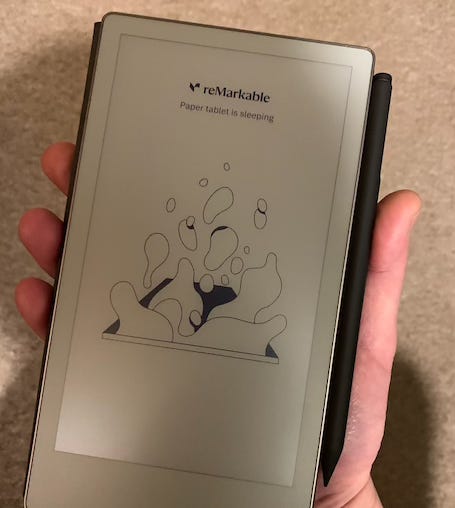
I’ve recently started carrying a reMarkable Pro Move. It sits in my bag, light and blank, without asking anything of me.
This isn’t about the device; I’m not reviewing it or recommending it. What interests me is just having something that’s ‘there’. When an idea arrives, I can reach for it without interruption.
No finding the right app. No friction.
I should say that most of what I capture goes nowhere. Fragments, phrases, half-drawn structures. They sit in a kind of holding pattern, and plenty of them stay there. That’s fine.
Capturing an idea isn’t the same as finishing one. You’re not committing to following through on the idea. You’re simply paying attention.
Capture is an act of respect, not obligation. You’re not promising to do anything with the idea. It says, this thought mattered enough to write down. Nothing more, nothing less.
Tools don’t create inspiration. We all know that. But they shape the conditions under which it can arrive.
A pen on the nightstand. A folded page in your coat. These are small things. But readiness lives in small things.
Creative practice isn’t just about the hours at the desk. It’s about everything that happens before you sit down. The walks. The waiting. The willingness to be interrupted by your own mind.
Being ready doesn’t mean being productive. It just means being open.
What helps you stay reachable? When something arrives at an inconvenient time, how do you catch it?
I’d love to know.