

Where Poems Begin
On noticing, fragments, and what happens before a poem appears

I think what derails most writers is that they are waiting for a better idea. Something that feels finished enough to be worth starting.
That’s not how my poems arrive. And I think, perhaps, that I’m not unique in this.
The myth of the “idea”
Ask where a poem begins and the expected answer is: an idea. A subject. A message you want to put into words.
It’s a reasonable-sounding answer. In my experience, it’s almost never how it actually happens.
Poems tend to arrive earlier than their messages do. Before the understanding, there’s a phrase that surfaces. An image or a feeling that won’t leave. The beginning of a poem is often accidental; it appears before the writer has any intention of writing, and it rarely announces itself as a poem.
You only recognise it afterwards.
The moment of noticing
There are moments in an ordinary day when something catches - and you almost don’t notice it catching.
The way a certain kind of light sits on a wall. An overheard sentence. The sound of a door in a particular house. None of this feels significant while it’s happening.
And yet. These moments are where poems often start - in small, specific instances, rather than clear intention.
You’ve probably passed several of these today. Most of them went unrecorded. That’s fine; they can’t all be poems. But some of them could have been, and the only way to find out is to write them down before they’re gone.
I remember stepping outside between meetings one afternoon - the sky half-filled with dark bluish-purple clouds coming in from the west, clear above me, rain not yet arrived but already felt. The first line of a poem came almost immediately. I noted it on my phone, the only thing I had to hand, and left it there for days.
The fragment stage
A poem doesn’t arrive as a poem.
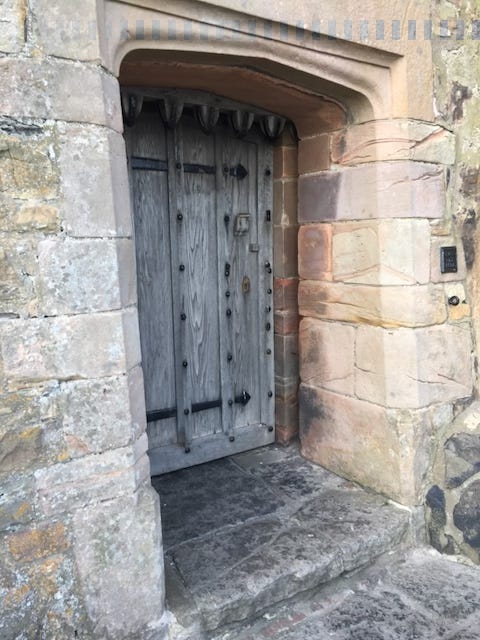
It arrives as a line. Or a phrase. Or, sometimes, just a rhythm. This is the fragment stage, and it can feel like being handed a key to an unknown door.
The writer usually doesn’t know, at this point, what the poem is about, and that’s fine; the fragment is enough, it’s the earliest form of ‘the thing’.
Write it down. Keep it somewhere. Don’t push it toward being finished before it’s ready.
Following the line
A second line arrives - maybe because you looked for it, maybe because it followed on its own.
You write a third. Something starts to form between them: a connection, a direction. The poem begins to show its shape. This is what following a line feels like from the inside - finding out what you’re building as you go.
Discovery happens during writing. Not before it.
You don’t think the poem through and then write it down. You think it through by writing it down. The writing is the thinking. The two are the same act.
When the poem reveals itself
You start with something concrete. A place. An object. The weather. Something you can touch or describe.
And then, at some point in the writing, the poem turns. What seemed to be about the place turns out to be about a person. What started with an object turns out to be about a year in your life, or a feeling you’ve been carrying. The concrete thing was the way in; it was never the destination.
This is one of the stranger pleasures of writing poems. You arrive somewhere you didn’t plan to go, and yet it’s exactly where you needed to be.
That afternoon outside between meetings became “Today / Tomorrow” - a poem that starts with weather, widens to the environment, and ends, in its final verse, in a completely unexpected place. The clouds were the way in, but they were never what it was going to be about.
You can read more about this in my previous post, “Poem: Today / Tomorrow“

Why beginnings matter
Writers wait. I wait. We hold back until we have something worth saying - something formed enough, significant enough, or clear enough to justify beginning.
The beginning is almost never any of those things. It’s incomplete and small and uncertain. And yet it’s enough. It’s the only starting point there is.
Our job as writers isn’t to generate ideas worth writing about. It is to notice what’s already there, capture it before it disappears, and follow it to see where it goes. The small observation, the overheard phrase, the feeling without a name - these are not too little. These are exactly where poems start.
Paying attention
A poem begins with attention. That’s the whole thing, really - noticing something, catching the fragment, following the line, and discovering what the poem is about somewhere along the way.
Not inventing. Noticing.
There’s a companion piece to this one, “Being ready to catch the work“, on what happens in the gap between noticing and noting - because the gap between noticing and writing it down is where most fragments are lost..

So the question isn’t, “Where do you find an idea?” It’s, “What caught your attention today? What did you almost let go?”
I’d love to hear where your own poems begin - leave a comment if you want to share.